





Skin cancer care in the Whitsundays

In North Queensland’s high-UV climate, we all have to remain vigilant about skin cancer.

We offer advanced skin cancer expertise, comprehensive digital imaging and on-site procedural care, meaning you can access specialised assessment, treatment and follow-up care close to home.

Living in the Whitsundays means long days on the water, outdoor work in tourism and the mines, and year-round exposure to intense tropical sun. While this lifestyle is one of the region’s greatest strengths, it also increases the risk of skin damage.

Two in three Australians will be diagnosed with skin cancer by the age of 70. In North Queensland, with high UV levels and outdoor occupations, regular skin checks are particularly important.

If you live locally or spend extended time boating, fishing, working outdoors or enjoying the beach, an annual skin check-up is a practical step in protecting your health.

We use advanced digital imaging technology to assess your skin, investigate any suspicious lesions, and monitor changes.

Our skin cancer care is powered by DermEngine, an intelligent software platform designed specifically to image, document and analyse skin conditions, including cancer.

What this means for you:

skincheck

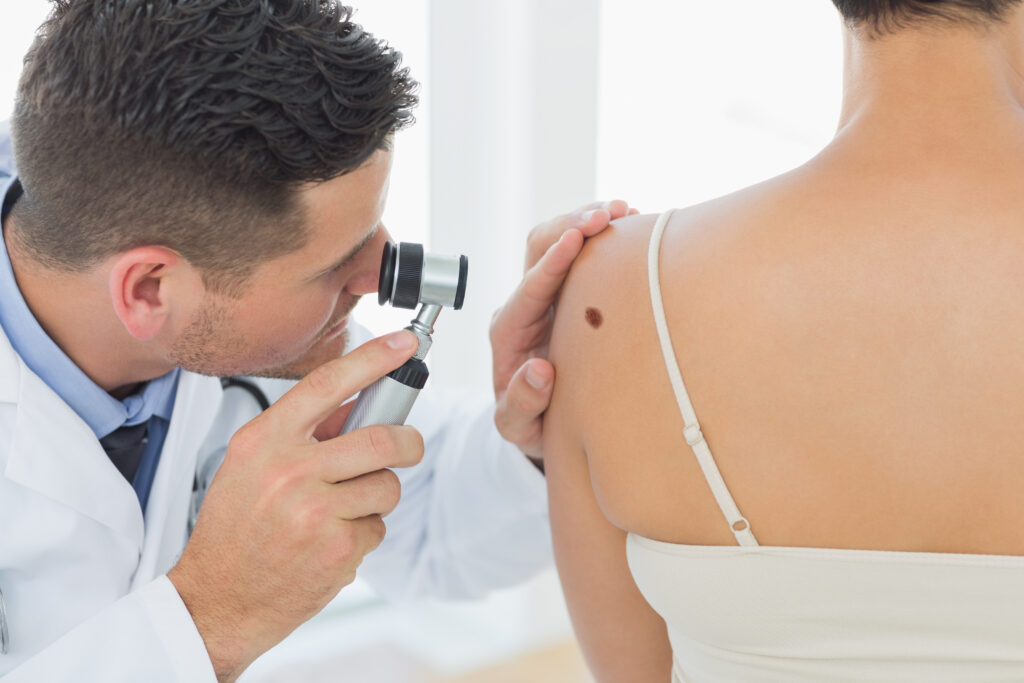
If your body scan identifies a suspicious lesion, your doctor will closely examine it using handheld dermoscopy.

Doctors with advanced skin cancer training

While all our doctors can perform skin checks and remove lesions, some have completed advanced training in skin cancer identification and management, including:

If you have concerns about melanoma signs and symptoms, BCC symptoms or possible Squamous Cell Carcinoma treatment, early review is essential.

If you notice a change, please see us immediately.

Get to know your own skin so you can identify new or changing moles. A simple monthly self-examination can help you identify early changes that require medical review.

care

The ABCDE skin cancer rule

Remember the ABCDE guidelines when looking at your moles or spots:

  • A – Asymmetry: One half does not match the other.
  • B – Border: Edges are irregular, blurred or uneven.
  • C – Colour: Multiple colours or uneven shading.
  • D – Diameter: Larger than 6 mm or increasing in size.
  • E – Evolving: Changes in size, shape, colour or feel.

care

The EFG rule for nodular melanoma

Nodular melanoma is a fast-growing form of melanoma, accounting for around 20% of cases.

It often does not fit the ABCDE skin cancer rule, which means it can be overlooked during routine self-checks. However, it can be recognised using the EFG rule, as it typically presents with the following three features:

  • E – Elevated
  • F – Firm
  • G – Growing

care

The ugly duckling concept

The “ugly duckling” is a spot that looks different from the rest of your moles. If one lesion stands out as unusual for you, even if it does not strictly fit ABCDE or EFG criteria, it should be assessed.

If you notice melanoma signs and symptoms, or a lesion that looks or feels different, get a professional skin check.
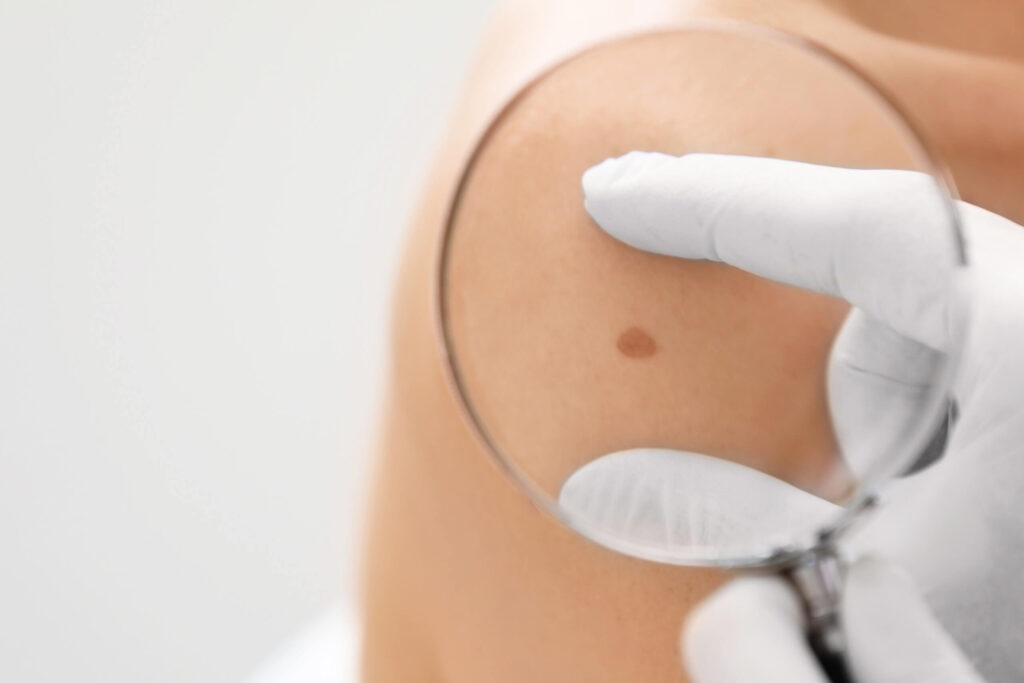
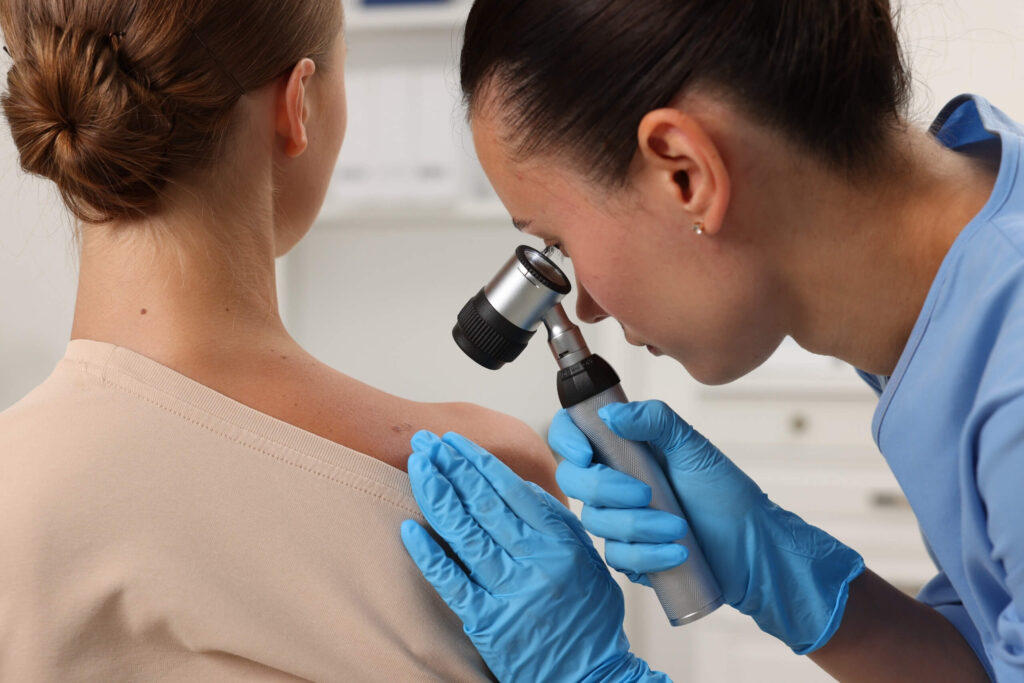
Close-up of a small brown mole on a shoulder being examined with a magnifying lens

Many locals refer to rough, scaly patches as sun spots. Medically, these are often solar keratosis, also known as actinic keratosis.

Solar keratosis are pre-cancerous skin lesions caused by cumulative UV exposure. While they may appear small and harmless, they can progress to Squamous Cell Carcinoma if left untreated.

Common features involve:

If you have persistent sun spots or rough patches, please do not ignore them.

Whitsunday Family Practice offers a full-service pathway, from initial detection and digital mole mapping through to definitive management.

Our services involve:

From detection to treatment under one roof

Early intervention significantly reduces the risk of more complex procedures later. If you have a lesion that is changing, bleeding, crusting or not healing, book immediately.

Person wearing a wide-brim hat at the beach with sunscreen applied to the shoulder in a sun shape

You may benefit from regular review if you:

In a region with some of the highest UV levels in the country, we must remain vigilant about skin cancer risk and take active steps to detect it as early as possible.

Establishing your digital record with Dermengine full body imaging supports long-term monitoring and encourages consistent follow-up at the same clinic, where your skin history can be compared year-on-year.